Thursday, 21 July 2022

Living in Two Worlds - Onepager

 Living in Two Worlds (LTW)
Onepager

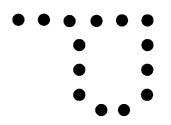
What is written on the cap? "P" or "d"? How do you know?

WHAT

  • A model of “HOW WE KNOW” called “Living in Two Worlds”
  • A diagram of the model’s elements and connections 
  • Elements: Physical world, Logical world and Attentional system
  • Connections: from Attention to both worlds and from here to Attention
  • In the Logical world distinguish ACTIVE and PASSIVE thought
  • Descriptions of the elements and connections
  • Descriptions of daily life situations seen in terms of the model

WHY

  • Propose a new way to look at obsessive thoughts
  • Contribute to a creative and responsible way of life
  • Contribute to overcome learning obstacles, avoid that young people think: “I am not clever enough”
  • Help in clarifying the misunderstandings about the constructivist view of how we know
  • In particular: make clear from the start that in constructivism there is no denial of the physical world; in fact, here it is part of the model

HOW

  • First draft of the model with the 3 elements connected: similar to the viability model diagram
  •  New: distinction ACTIVE/PASSIVE thought in the LOGICAL world 
  • Describe the processes and implications of this model 
  • Explore ways to describe some simple, common, daily life situations in terms of the model: use bestsellers (like “The Secret”) for finding ideas about such situations
  • Add more details (categorization, triads, correlations, etc.) when needed 
  • During the development process, publish the results in a blog even if they are still provisional; this will provide a kind of journal (diary) of the project; in social media put links to the blog 
  • Get feedback from friends and answer to their comments & questions 
  • Perform Q&A sessions with a person interested in the subject “How we know”: the topics of the sessions will follow Ceccato’s lessons transcribed in his book “Il Punto”: from these Q&A get inspiration for further developing the model.  
  • Record the Q&A sessions and publish them as a course on a suitable MOOC platform adding appropriate comments and resources 
  • To be defined and estimated later: workpackages and resources (duration, personnel expenses and other costs)

WHO

  • Project lead: Marco Bettoni 
  • Contributors: Marco's friends. Tasks: read the project output during the development process, give feedback (comments, questions), get answers as adaptations or extensions of the model
  • Partner of project “Punto”: a friend from Ukraine. Tasks: same like the other friends, additionally participate in Q&A sessions with project lead


Saturday, 16 July 2022

Active and passive thought

In my previous post I mentioned "background thinking" as a process that brings to our mind thoughts that we did not search for or even did not want to deal with.

A friend then said: "I am a very instinctive person. What about instinct? Where is it in your model? Is it part of the background thinking?"

Good question! 

HOW WE KNOW: ACTIVE & PASSIVE PROCESSES

In fact, beside instinctive, there are also other thought processes of this kind, like "intuitive", "creative" thinking. They all produce thoughts in a spontaneous way, without an active construction and control by the individual, who behaves rather passively in relation to them.

Based on this I would distinguish two main areas of thinking: ACTIVE & PASSIVE processes.

Then the flow of thought can be conceived as a continuous alternation of active and passive thought.

Active and passive thought processes form a unity in their duality,  they complement each other and they also influence each other.

For example in the mantra meditation technique, actively repeating the same sentence (and related meaning) has an influece on passive thinking.

A similar example are people suffering from obsessive thoughts: in this case the mantra comes from passive thinking processes and influences the active thought processes and so on.

Last but not least advertising: even if the message is actively perceived and interpreted, the goal is to influence the passive thinking of the person so that he or she will buy the product or service "instinctively".

My "Two-Worlds" model is intended as a model of the ACTIVE processes of thinking, those that we can control directly.

A model of PASSIVE thinking will follow later, becaue it requires the ACTIVE model as a prerequisite.


Thursday, 14 July 2022

Two-worlds model v2

Two friends are having a conversation:

  • One says: "I am afraid that something happened that damaged my body".
  • The other asks: "How do you know?"

---------------------------------------------
Here is a sketch for a model of HOW WE KNOW that I wish to further develop for contributing to that conversation in a supporting, creative and responsible way.

HOW WE KNOW: A TWO-WORLDS MODEL 

  1. The world in which we live is the INTEGRATION of TWO WORLDS:
    WORLD 1 is the SHARED PHYSICAL world or world of physis;
    WORLD 2 is the INDIVIDUAL LOGICAL world or world of logos
  2. Because of this INTEGRATION we do not notice the two worlds separatedly, we experience them as ONE REAL WORLD.
  3. The integration of physis and logos in one individual is the product of a functional system of our brain: ATTENTION (Ceccato's model)
  4. ATTENTION, conceived as a system that we can control (cybernetic system), is the system that we use to construct our individual LOGICAL world
  5. The attentional system enables us to construct our logical world by means of ATTENTIONAL OPERATIONS. 
  6. In this way ATTENTION provides the basis for the AWARENESS, REGULATION and EQUILIBRATION (control) of our logical world.
  7. But this awareness, regulation and equilibration are NOT UNDER DIRECT CONTROL by the individual. We notice this through "background thinking", a process that brings to our mind thoughts that we did not search for or even did not want to deal with.
  8. Thus, although we construct the LOGICAL world, after constructing it we do not have direct CONTROL on it
  9. What about EMOTIONS? Emotions are ENERGIES that are triggered by our logical world and after that they fuel its activities
  10. EMOTIONS provide the energy used by the brain for constructing, regulating, equilibrating and being aware of our logical world.

MB / 14.7.2022

Sunday, 19 June 2022

A War IS NOT a Conflict

 Dictionaries declare as first definition of “war” that it is “an armed conflict”. Unfortunately, that is conceptually wrong: a war is not a conflict! I will demonstrate this claim by means of a conceptual analysis (see concept map below).

My conceptual analysis of “war” and “conflict” is explained by means of a concept map called “War is not Conflict”. From this concept map, the following definition of “war” can be derived:

War is a means of conflict resolution
through which the aggressor
implements a strategy of military violence
with the end of imposing his own views.

So, since war is "a means of conflict resolution" it is clear that it cannot be a conflict. 

Well, yes, dictionaries can be wrong. Why? Because they collect how words are used and if the majority of people uses a word in a wrong way, then that error becomes an error in the dictionary.

#StandWithUkraine
#NoToRussia

Sunday, 8 May 2022

Denazification of the moon

#StandWithUkraine


 Ahead of Russia's Victory Day, there are rumors that Putin will order the "denazification" of the Moon ...

Tuesday, 26 April 2022

shared physical world

 The first DOMAIN OF KNOWING in which we lack awareness is:

SHARED PHYSICAL WORLD

  • we are not aware that the matter of our shared physical world is "formally indefinite" = does not have the "universal forms" that we unwarily attribute to it.

 This claim uses five terms (expressions) that need to be explained:

  1. shared physical world 
  2. matter (of the shared physical world) 
  3. formally indefinite (matter)  
  4.  universal forms (of matter) 
  5.  attributing forms (to the shared physical world)

Before explaining them verbally, I will present an example that will help later in the explanation.

Figure 1 – Example 1

 What is this (Fig.1)? Looks like a clear glass pepper shaker with a metallic cap with “P”, right? Yes, but now let us focus on the cap.

Figure 2 – Example 1, detail

Could we “read” this “P” in Fig. 2 as a different letter?  Of course, we can read it in Fig. 2 as an upside down “d”. In Fig. 3 the same image rotated through 180º makes the reading “d” easier:


 Figure 3 Example 1, detail rotated 180º

 And besides letters of the Latin alphabet, how could we interpret this dot pattern, if we transfer it to a sheet of paper, as a sketch?  Fig. 4 shows two variations in two new positions, because that makes it easier to see some other interpretations:

a)

b)

Figure 4 Two new positions

 And by combining two patterns we could have for instance:

a)
   b)

Figure 5 Two combinations

I suggest that you now stop here and try by yourself to see something in these 4 patterns of Fig. 4 and Fig. 5, before reading further.

…..

How was it? What did you see?

What I see is: 

  • sectional sketch of a train tunnel, with an underground exit to the right (4a); 
  • floor plan of a bungalow, with a path arriving to the door from left (4b); 
  • floorplan of two bungalows, with a shared yard (5a); 
  • two short poles with flags, like in the flag semaphore system (5b). 
Moreover
  • Pattern 4b can also be seen as an upside down 4a (the tunnel); 
  • and 4a, 4b and 5a can be seen as one of the flags of 5b. 
  • And of course, all patterns can be seen just as a “P” or a “d” in different positions and/or combinations.

What does this mean? Try yourself to make sense of the above facts. I will propose some conclusions in a future post, after explaining all the four DOMAINS OF KNOWING in which we lack awareness.

With the background of the previous example, we are now ready for explaining the mentioned terms relating to the FIRST DOMAIN OF KNOWING in which we lack awareness: 

  1. shared physical world: the metal (cap), the glass (shaker), the paper (sheet) and the dots (in the cap, on the sheet) are elements of the shared physical world; “shared” because anyone can perceive them;  
  2. matter (of the shared physical world): metal and glass 
  3. formally indefinite (matter): metal and glass have shapes, but not what we call here “forms” 
  4. universal forms (of matter): the forms “cap”, “shaker”, various “dots patterns”; they are "universal " in the sense that anyone can use them successfully as forms of this matter with its shapes. 
  5. attributing forms (to the shared physical world): the human mind performs the process of perceiving by producing the “forms” (“cap”, “shaker”, various “dots pattern”) and applying them to the appropriate matter: metal, glass, paper and dots.
 

Sunday, 24 April 2022

Sleeping when knowing

 TWO WORLDS - SLEEPING WHEN KNOWING?

The problem that we have with the two worlds in which we live, is a problem of awareness of WHAT WE DO WHEN KNOWING.

It consists of a quadruple lack of awareness with the consequence that we behave in this regard as if we were sleeping: already Heraclitus (535-475 BCE) lamented a similar problem with the human understanding of the world, when he claimed that men: 

"do not know better what they are doing when awake, 
than are remembering what they do when they sleep
."
- Heraclitus, Fragment B1

The four DOMAINS OF KNOWING in which we lack awareness are:

  1. SHARED PHYSICAL WORLD: we are not aware that the matter of our shared physical world is "formally indefinite" (does not have  the "universal forms" that we unawarily attribute to it)
  2. DEFINITE THINGS: we are not aware that definite things are not given in the shared physical world but (individually) made by us by adding our individual forms to the indefinite matter. Forms that, although constructed in the course of a continuous social process of negotiation of meaning, preserve an individual foundation.
  3. INDIVIDUAL EXPERIENTIAL WORLD: we are not aware that each person integrates all her/his definite things into an individual system, which is her/his individual experiential world.
  4. TWO WORLDS: we are not aware of equilibrating the shared physical world and the individual experiential world, thus living in two worlds.  Together they constitute a consistent dynamical system.

Immanuel Kant "confessed" of having also been like sleeping, until an objection that he found in Hume "interrupted my dogmatic slumber" (Kant, Prolegomena to Any Future Metaphysics, 1783). After that he became aware of domain 1 and 2, probably also of 3.

Friday, 22 April 2022

Aristotle, Kant and the two worlds

FROM ARISTOTLE (350 BCE)
TO KANT'S COPERNICAN REVOLUTION (1787)
AND ITS 2 WORLDS (2022)

We have seen in a previous blog post that according to Aristotle:

  • the essence of a definite thing is its form, which is that cause by reason of which the matter is that definite thing (1).

As a cosequence, according to Aristotle's view: GIVEN a definite thing, we can obtain its essence by SEPARATING its form from its matter.

In that post I claimed that Aristotle made a small error and proposed how to correct it. In the previous sentence, the error can be corrected by simply substituting the third "is" with "becomes". Then we obtain:

  • the essence of a definite thing is its form, which is that cause by reason of which the matter BECOMES that definite thing.

The correction is small but the consequences are huge: the definite thing is no longer GIVEN. It is a product that results from ADDING form to matter.

Thus, this simple substitution leads to a REVOLUTION: it turns the whole situation upside down, like in Kant's Copernican Revolution.

But there is a second main consequence, that Kant forgot to mention: that with this substitution, instead of living in one single World (a universe of definite things), we now now live in TWO WORLDS:

  1. the world of GIVEN indefinite matter = one physical world, equal for all
  2. the world of PRODUCED definite things = many experiential worlds, one for each individual human being.

To be human is to keep these two worlds in a homeostatic balance.

Wednesday, 20 April 2022

Small error for a man

A SMALL ERROR FOR A MAN
but a giant mistake for mankind.

How do we know? Aristotle's (small) error 350 BCE.

Aristotle thought that the mind forms ideas in the following way: 

  1. the mind takes the "forms" of things
  2. and separates them from the "matter" of things.

This way of producing ideas was for him the basic process that enables us to understand the nature of things. We see the foundation for this approach in his main work, later called "Metaphysics", in chapter VII, an inquiry into the essence of things:

Aristotle (350 BCE), Metaphysics, book VII (Z), 17, 1041b.

Text in English, German and Ancient Greek:

  • EN: "... one looks for that cause of the matter (but that is the form), by reason of which the matter is a what (some definite thing); but that is the essence (of the thing)."
  • GE: "Man sucht also die Ursache des Stoffes (das ist aber die Form), durch die der Stoff ein Was ist; doch das ist das Wesen."
  • AG: "ὥστε τὸ αἴτιον ζητεῖται τῆς ὕλης (τοῦτο δ᾽ ἐστὶ τὸ εἶδος) ᾧ τί ἐστιν: τοῦτο δ᾽ ἡ οὐσία."

This is a profound insight connecting four fundamental concepts: matter, form, thing and essence. Unfortunately Aristotle made here a small mistake: he wrote "is" where he should have written "becomes".

With this small correction, his sentence would be:

  • "... one looks for that cause of the matter (but that is the form), by reason of which the matter BECOMES a what (some definite thing); but that is the essence (of the thing)."

In other words: "matter" BECOMES a definite things by means of "form"; for this reason "form" is the essence of that thing.

Why is it correct to use "becomes" instead of "is"? Because  "forms" are not there in "matter" ready to be taken. What Aristotle called "forms" are products of the mind, mental constructs. The mind "produces" forms (mental constructs) that we ADD to the "matter", like a potter modeling clay.

In this way the indefinite matter BECOMES a "what", a definite thing, an experiential thing in our experiential world.

In this way each of us lives in two worlds: the physical environment (matter) and her/his own experiential world (definite things).

Monday, 18 April 2022

Peace and mind

 PEACE & MIND - FOR A MINDFUL PEACE
#StandWithUkraine #MindfulPeace

For promoting and establishing Peace we need to understand each other.
For understanding each other we need to understand the human mind, how the mind works, knowing.

How do we know?
How do we perceive?

A person perceiving something does not become that something:
it is the something that becomes (a part of) the person, that's assimilation."
More precisely: that something (a part of the physical world) becomes a specific mental object in the experiential world of the person.

So, each of us lives in two worlds: the physical environment and her/his own experiential world.

This is based on a statement by Piaget (see image):
"A rabbit that eats a cabbage does not become a cabbage: it's the cabbage that becomes a rabbit, that's assimilation." - Jean Piaget, 1977
Original:
"Un lapin qui mange un chou ne devient pas un chou: c'est le chou qui devient du lapin, c'est ça l'assimilation." - Jean Piaget, 1977
Bringuiler, J.-C. (1977) Conversations libres avec Jean Piaget. Paris: Robert Laffont, p. 69

To know how we know

 "All men by nature desire to know"

... but very few desire to know HOW they know.

Original: πάντες ἄνθρωποι τοῦ εἰδέναι ὀρέγονται φύσει.
- Aristotle (384–322 BC), at the beginning of his book "Metaphysics", a treatise of "first philosophy".
 
That is why, since Aristotle, the human mind has not evolved: we just use it. That is not enough for promoting peace, #MindfulPeace.

Aristotle thought that the mind forms ideas by TAKING the "forms" of things and separating them from the "matter" of things. This way of producing ideas was for him the basic process  that enables us to understand the nature of things.
Unfortunately he made a small mistake here:
we do not "separate" forms from things: instead, we "produce" forms (mental constructs) that we ADD to the "matter" of things, like a potter modeling clay, thus producing the "experiential" things of our experiential world.